


Struggling with a natural skincare routine that delivers results? You’re not alone. Many people invest in quality vegan products but miss the mark on application order, unknowingly reducing effectiveness and risking irritation. The good news: a simple five-step sequence transforms how your skin absorbs nutrients and maintains its protective barrier. This guide breaks down the exact order, product selection, and customization tips to help you build a routine that works for your unique skin type.
Table of Contents
- How To Choose Your Natural And Vegan Skincare Products
- Core 5-Step Natural And Vegan Skincare Routine
- Cleansing Options: Natural Plant-Based Vs Synthetic Cleansers
- Role And Selection Of Toners And Serums In Vegan Skincare
- Moisturizer And Sun Protection In Natural Skincare
- Common Mistakes And Troubleshooting Your Natural Skincare Routine
- Summary And Situational Recommendations For Skincare Routine Customization
- Discover Our Natural And Vegan Skincare Products
- Frequently Asked Questions
Key takeaways
| Point | Details |
|---|---|
| Product order matters | Applying skincare steps in the correct sequence maximizes ingredient absorption and minimizes irritation. |
| Customization is essential | Tailoring your routine to your specific skin type and concerns improves results significantly. |
| Natural ingredients deliver results | Plant-based actives provide hydration and barrier repair comparable to synthetic alternatives. |
| Sun protection is non-negotiable | Mineral-based broad-spectrum sunscreen prevents photoaging and maintains skin health. |
| Avoid common mistakes | Skipping steps, over-exfoliating, or incorrect layering undermines your routine’s effectiveness. |
How to choose your natural and vegan skincare products
Selecting the right natural skincare products sets the foundation for an effective routine. Not all products labeled “natural” deliver equal benefits, so understanding key selection criteria helps you make informed choices.
Start with ingredient transparency. Look for products listing plant-based ingredients such as aloe vera, chamomile, and green tea extract that have anti-inflammatory and antioxidant properties beneficial for skin health. These botanical actives support skin repair while reducing redness and environmental damage.
Match products to your skin type:
- Dry skin benefits from oil-based cleansers and rich moisturizers with shea butter or jojoba oil
- Oily skin needs lightweight, water-based formulas with niacinamide or tea tree extract
- Sensitive skin requires fragrance-free products with soothing ingredients like calendula or oat extract
- Combination skin responds well to balanced formulations that hydrate without causing congestion
Ethical certifications matter. Seek out cruelty-free labels, vegan certifications, and brands committed to sustainable packaging. These indicators often correlate with higher quality formulations and transparency about ingredient sourcing.
Consider absorption properties when evaluating products. Lightweight serums should penetrate quickly, while moisturizers create a protective seal. Products that pill or feel heavy may contain fillers that interfere with subsequent layers. For comprehensive guidance on selecting sustainable options, explore our eco-friendly skincare guide.
Pro Tip: Test new products on your inner forearm for 48 hours before applying to your face to identify potential sensitivities.
Core 5-step natural and vegan skincare routine
Mastering the correct sequence amplifies your skincare investment. The sequence of cleanser, toner, serum, moisturizer, and sunscreen is essential for skin health and product efficacy, with each step preparing your skin for optimal absorption of the next layer.
Follow this morning and evening framework:
-
Cleanse: Remove impurities, makeup, and excess oil with a gentle, pH-balanced cleanser. Morning cleansing eliminates overnight oil buildup, while evening cleansing removes environmental pollutants.
-
Tone: Apply an alcohol-free toner to balance skin pH and prep for better serum absorption. Pat gently rather than rubbing to avoid irritation.
-
Serum: Apply targeted treatment serums while skin is slightly damp for deeper penetration. Vitamin C serums work best in the morning, while retinol alternatives suit evening routines.
-
Moisturize: Lock in hydration with a moisturizer suited to your skin type. This step seals active ingredients and reinforces your skin’s natural barrier.
-
Protect: Apply broad-spectrum mineral sunscreen (SPF 30 minimum) every morning, even on cloudy days. This final step prevents photoaging and protects against UV damage.
Adjust timing based on skin needs. Dry skin may require heavier evening moisturizers, while oily skin benefits from lighter morning formulas. For detailed layering techniques that maximize product benefits, review our vegan skincare layering guide.
Pro Tip: Wait 30 to 60 seconds between steps to allow each product to absorb fully before applying the next layer.
Cleansing options: natural plant-based vs synthetic cleansers
Cleansing forms the foundation of any skincare routine, but choosing between natural and synthetic options affects results and skin health. Understanding the trade-offs helps you select the best option for your needs.
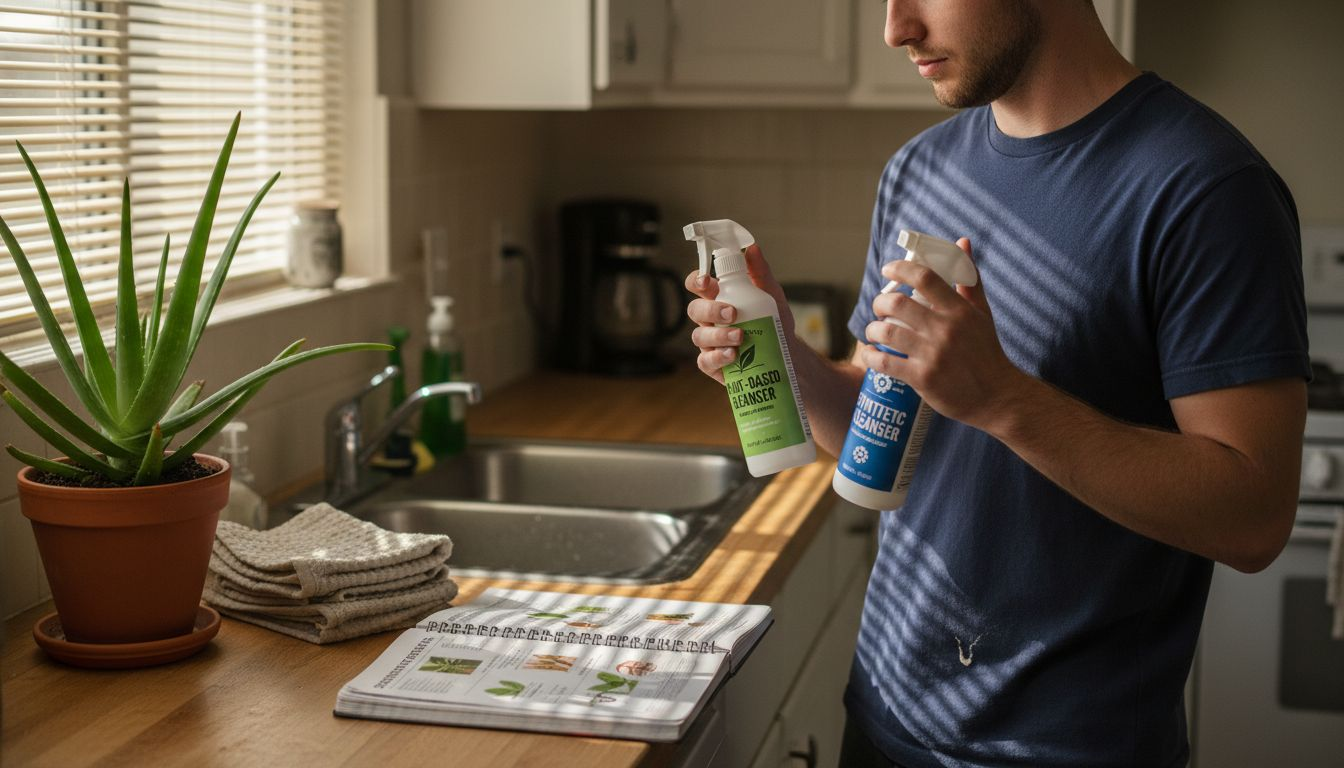
Natural plant-based cleansers reduce irritation by 30% compared to synthetic surfactants, making them ideal for sensitive skin. Botanical ingredients like chamomile and coconut-derived surfactants clean effectively while preserving natural oils.
| Feature | Natural Plant-Based | Synthetic |
|---|---|---|
| Irritation risk | Low to minimal | Moderate to high |
| Makeup removal | Moderate effectiveness | Highly effective |
| Skin barrier impact | Preserves natural oils | Can strip protective barrier |
| Ingredient transparency | Usually clear labeling | May contain undisclosed chemicals |
| Environmental impact | Biodegradable formulas | Often contains microplastics |
Natural cleansers excel for daily use:
- Oil-based formulas dissolve makeup gently without harsh rubbing
- Cream cleansers hydrate while cleaning, perfect for dry or mature skin
- Gel cleansers with natural surfactants suit oily and combination skin
- Powder cleansers offer travel-friendly options with minimal preservatives
Synthetic cleansers provide stronger cleansing power but risk over-stripping skin. Heavy makeup wearers might use synthetic options occasionally, but daily use can disrupt pH balance and trigger sensitivity. For those prioritizing sustainability alongside effectiveness, our eco-friendly skincare guide offers detailed product recommendations.
Role and selection of toners and serums in vegan skincare
Toners and serums occupy the crucial middle ground in your routine, delivering concentrated actives when skin is most receptive. Many people skip these steps, missing significant benefits for texture and brightness.
Toners serve multiple purposes beyond simple cleansing. They rebalance skin pH after washing, prepare the skin barrier for better absorption, and deliver lightweight hydration. Choose alcohol-free formulas with rose water, witch hazel, or hyaluronic acid to avoid drying effects.
Serums pack powerful ingredients into targeted formulas:
- Vitamin C serums brighten skin tone and fade hyperpigmentation when derived from natural sources improve skin brightness and reduce photoaging with consistent use over 12 weeks
- Hyaluronic acid serums deliver deep hydration by attracting moisture to skin cells
- Niacinamide serums regulate oil production and minimize pore appearance
- Antioxidant serums with green tea or resveratrol protect against environmental damage
Application order matters. After cleansing and toning, apply serums from thinnest to thickest consistency. Water-based serums go first, followed by oil-based treatments. This ensures each layer penetrates properly without creating a barrier.
Pro Tip: Press serums gently into skin using upward motions rather than rubbing to enhance absorption and avoid pulling delicate facial tissue.
For comprehensive guidance on maximizing serum benefits through proper layering, our vegan serum layering guide provides week-by-week instructions for building tolerance and seeing results.
Moisturizer and sun protection in natural skincare
The final two steps seal your routine and provide lasting protection. Moisturizers and sunscreens work together to lock in treatments while defending against environmental damage.
Natural oils like jojoba and argan provide hydration and skin barrier repair comparable to synthetic moisturizers. These plant-based options mimic skin’s natural sebum, absorbing quickly without greasiness. Choose formulations based on your skin’s hydration needs.
Moisturizer selection by skin type:
- Dry skin: Rich creams with shea butter, avocado oil, or ceramides
- Oily skin: Lightweight gels with aloe vera or squalane
- Sensitive skin: Fragrance-free lotions with colloidal oatmeal or calendula
- Combination skin: Balanced emulsions that hydrate dry areas without clogging pores
| Moisturizer Component | Natural Source | Primary Benefit |
|---|---|---|
| Emollients | Jojoba, argan oil | Softens and smooths skin texture |
| Humectants | Hyaluronic acid, glycerin | Attracts and retains moisture |
| Occlusives | Shea butter, plant waxes | Seals moisture and prevents water loss |
| Antioxidants | Vitamin E, green tea | Protects against free radical damage |
Sun protection completes your morning routine. Mineral-based sunscreens with zinc oxide or titanium dioxide offer broad-spectrum protection without chemical filters. Apply a nickel-sized amount to face and neck 15 minutes before sun exposure, reapplying every two hours outdoors.
Natural sunscreens differ from synthetic versions in texture and application. They may leave a slight white cast initially but blend with gentle patting. This minor cosmetic trade-off delivers safer, reef-friendly protection suitable for sensitive skin. Understanding these benefits helps you make informed choices, as detailed in our guide on natural skincare benefits.
Common mistakes and troubleshooting your natural skincare routine
Even with quality products, execution errors sabotage results. Recognizing and correcting these common pitfalls maximizes your routine’s effectiveness and prevents setbacks.
Frequent mistakes to avoid:
- Skipping morning sunscreen: UV damage occurs even on cloudy days, accelerating aging and hyperpigmentation. Make mineral sunscreen non-negotiable regardless of weather or indoor plans.
- Incorrect layering order: Applying heavy creams before lightweight serums blocks absorption. Always move from thinnest to thickest consistency.
- Over-exfoliating: Using chemical or physical exfoliants daily strips your skin barrier, causing redness and increased sensitivity. Limit exfoliation to two or three times weekly.
- Ignoring skin reactions: Persistent redness, burning, or breakouts signal product incompatibility. Stop use immediately and simplify your routine to identify triggers.
- Rushing between steps: Applying products too quickly prevents proper absorption. Allow 30 to 60 seconds between layers for optimal penetration.
- Using expired products: Natural formulations have shorter shelf lives than synthetic alternatives. Check expiration dates and discard products that smell off or change texture.
Troubleshooting strategies include introducing one new product at a time to isolate reactions and keeping a simple three-step routine (cleanse, moisturize, protect) when skin feels compromised. Gradually rebuild with additional steps once stability returns.
For detailed guidance on avoiding layering mistakes and building an effective routine, our vegan skincare layering guide provides troubleshooting tips for common issues.
Summary and situational recommendations for skincare routine customization
Personalizing your routine ensures it addresses your specific needs rather than following a generic template. Use these recommendations to adapt the core five-step framework for optimal results.
| Skin Type | Morning Focus | Evening Focus | Key Considerations |
|---|---|---|---|
| Dry | Hydrating toner, rich moisturizer, mineral SPF | Oil cleanser, nourishing serum, overnight cream | Layer hydration, avoid harsh cleansers |
| Oily | Balancing toner, lightweight gel, mattifying SPF | Gentle cleanser, clarifying serum, light moisturizer | Don’t skip moisturizer, use oil-free formulas |
| Sensitive | Fragrance-free products, soothing ingredients, mineral SPF | Gentle cleanse, minimal actives, barrier repair | Patch test everything, simplify routine |
| Combination | Targeted application, balanced formulas, broad-spectrum SPF | Double cleanse, hydrating serum, gel-cream hybrid | Adjust products by face zone as needed |
Beginner recommendations:
- Start with cleanser, moisturizer, and sunscreen only
- Add one new product every two weeks to monitor reactions
- Choose multi-purpose products to simplify routine
- Focus on consistency over complexity for first three months
Experienced user recommendations:
- Incorporate targeted serums for specific concerns (pigmentation, fine lines, texture)
- Adjust routine seasonally: richer products in winter, lighter formulas in summer
- Consider weekly treatments like masks or gentle exfoliants
- Track results with photos to evaluate product effectiveness
Seasonal adjustments matter. Winter demands heavier moisturizers and barrier protection, while summer benefits from lightweight hydration and higher SPF. Listen to your skin’s changing needs rather than rigidly following year-round routines.
Discover our natural and vegan skincare products
Ready to transform your routine with products that align with the principles outlined in this guide? Didis Beauty Center curates a thoughtful selection of natural and vegan skincare designed for effectiveness and sustainability.

Our collection emphasizes ingredient transparency, cruelty-free certifications, and eco-conscious packaging. Each product undergoes rigorous quality testing to ensure it delivers the benefits you expect from natural formulations. Whether you’re building your first routine or refining an established regimen, we offer solutions for every skin type and concern.
Explore our educational resources to deepen your understanding of why choosing natural skincare benefits both your skin and the environment. Our vegan skincare layering guide provides week-by-week instructions for implementing these principles effectively.
For those ready to commit to a complete routine, our daily essential skincare bundle includes all five core steps in full-size products, offering convenience and value while ensuring product compatibility.
Frequently asked questions
What are the essential steps in a natural and vegan skincare routine?
The five essential steps are cleansing, toning, serum application, moisturizing, and sun protection. Each step prepares your skin for the next layer, maximizing ingredient absorption and effectiveness. Morning routines emphasize protection, while evening routines focus on repair and regeneration.
How do I customize my natural skincare routine for sensitive skin?
Use gentle, plant-based cleansers without sulfates and alcohol-free toners with soothing ingredients like chamomile or rose water. Avoid products with synthetic fragrances and limit active ingredients to one or two until your skin builds tolerance. Always patch test new products and simplify your routine if irritation occurs.
Why is the order of skincare steps important?
Proper sequencing ensures active ingredients penetrate deeply while preventing product interactions that reduce efficacy. Applying products from thinnest to thickest consistency allows each layer to absorb without creating barriers. Incorrect order can cause pilling, decrease absorption by up to 40%, and increase irritation risk.
Are mineral sunscreens better for natural skincare?
Mineral sunscreens with zinc oxide or titanium dioxide provide broad-spectrum UV protection using natural ingredients that sit on skin’s surface rather than absorbing into it. They cause less irritation compared to chemical sunscreens and offer immediate protection upon application. While they may leave a slight white cast, newer formulations blend more easily while remaining reef-friendly and suitable for sensitive skin.
Discourse (0)