


TL;DR:
- Building a successful natural skincare brand requires clear target audience definition and authentic values.
- Visual identity and certifications must communicate sustainability and trustworthiness consistently throughout all channels.
- Genuine transparency and storytelling are more impactful than perfection, fostering long-term consumer trust.
Starting a natural skincare brand sounds exciting until you realize the shelves (physical and digital) are already packed with green leaves, cream-colored labels, and bold cruelty-free claims. Standing out takes more than a pretty logo. The core steps for skincare branding include defining your target audience, establishing your brand essence, and developing a consistent visual identity across every channel. When your brand is built on natural, vegan, and eco-conscious values, each of those steps carries extra weight. Consumers are sharp. They can spot inauthenticity fast. This guide walks you through every stage of building a skincare brand that not only looks good but earns genuine trust.
Table of Contents
- Lay the foundations: Define your audience, values, and mission
- Establish your brand essence: Story, personality, and positioning
- Designing your visual identity for eco-conscious appeal
- Ethical ingredients, certifications, and sustainable packaging
- Our take: Authenticity matters more than perfection in clean beauty branding
- Ready to launch? Expert help for natural skincare branding
- Frequently asked questions
Key Takeaways
| Point | Details |
|---|---|
| Start with strategy | Successful branding begins by defining your unique audience, values, and mission before any design work. |
| Story builds loyalty | A compelling brand story and authentic personality set you apart in the natural skincare market. |
| Visuals matter | Consistent, eco-friendly designs using earthy tones and minimalist elements instantly signal your values. |
| Credibility needs proof | Certifications and ingredient transparency are essential for building trust with eco-conscious shoppers. |
| Sustainable packaging sells | Choosing recyclable, responsibly sourced packaging meets consumer demand and strengthens your ethical image. |
Lay the foundations: Define your audience, values, and mission
Most new beauty entrepreneurs want to jump straight to designing a logo or picking a color palette. That instinct is understandable, but skipping the strategy phase is one of the most common reasons brands stall before they gain traction. Strategy before visuals is not just advice, it is a proven approach where defining purpose and vision first, then maintaining consistency across touchpoints, can drive a 40% sales uplift in documented cases.
Start by getting specific about who you are selling to. The natural skincare market is not one audience. It includes eco-minded Gen Z shoppers who prioritize zero-waste packaging, ingredient-savvy millennials who read every INCI list, and luxury wellness buyers who want clean formulas without compromising on elegance. Each group responds to different messaging, different aesthetics, and different price points. Knowing which group you serve shapes every decision you make afterward.
Once your audience is clear, work through these key questions to define your values and mission:
- What problem does your brand solve? (Example: providing effective vegan skincare for sensitive skin without synthetic fragrance)
- What do you stand against? (Example: animal testing, harmful chemicals, wasteful packaging)
- What is your commitment to sustainability? (Example: 100% recyclable packaging, responsibly sourced botanicals)
- What feeling should customers walk away with? (Example: confident, cared for, aligned with their values)
- What makes your approach different from competitors?
Your answers to these questions become the raw material for your mission statement. A strong mission statement is one or two sentences that capture who you serve, what you offer, and why it matters. It guides every future decision, from which ingredients you source to how you write your product descriptions.
Authenticity is non-negotiable here. Vague language like “we love nature” or “committed to the planet” without substance behind it is how brands get accused of greenwashing. The natural beauty branding impact is real, but only when the brand’s stated values match its actual practices.
Pro Tip: Write your mission statement before you open a single design tool. Pin it somewhere visible. Every time you make a brand decision, check it against that statement. If it does not align, rethink the decision.
Establish your brand essence: Story, personality, and positioning
Once you are clear on your values, you need to distill them into a distinct story and personality that engage consumers on an emotional level. Facts inform. Stories connect.
The brands that build loyal followings in the natural skincare space almost always have a compelling origin. Maybe the founder switched to veganism after learning about animal testing practices. Maybe a personal skin struggle led to formulating a gentler alternative. These stories are not just marketing. They are proof that the brand’s values are lived, not manufactured. Crafting a brand story is central to skincare branding because it gives consumers a reason to care beyond the product itself.
Here is a simple process to build yours:
- Identify the turning point. What moment or realization led you to create this brand?
- Name the problem you witnessed. What was missing in the market or in your own life?
- Describe your solution. How does your brand address that gap in a way others do not?
- State your commitment going forward. What promise do you make to your customers and the planet?
- Choose a brand personality. Are you nurturing and warm, science-backed and precise, or luxurious and refined?
Your personality choice matters for positioning. A holistic, plant-based brand that leans into ritual and wellness will use different language, imagery, and partnerships than a science-backed vegan brand emphasizing clinical results. Neither is wrong. But you must pick a lane and stay in it. Trying to appeal to everyone usually means connecting with no one.
For vegan branding methodology, the key is leaning into your product strengths and communicating them consistently without being preachy. Consumers who care about vegan values appreciate honesty. They do not want a lecture.
The brands that win in clean beauty are not the ones with the most polished campaigns. They are the ones that make customers feel seen, understood, and aligned. Authenticity and premium appeal are not opposites. You can be genuine and refined at the same time.
Use storytelling for beauty brands as a strategic asset, not an afterthought. It is what separates memorable brands from forgettable ones.
Designing your visual identity for eco-conscious appeal
With your story and positioning set, your next step is translating these into visuals your audience will immediately recognize and trust. Visual identity is not decoration. It is communication.
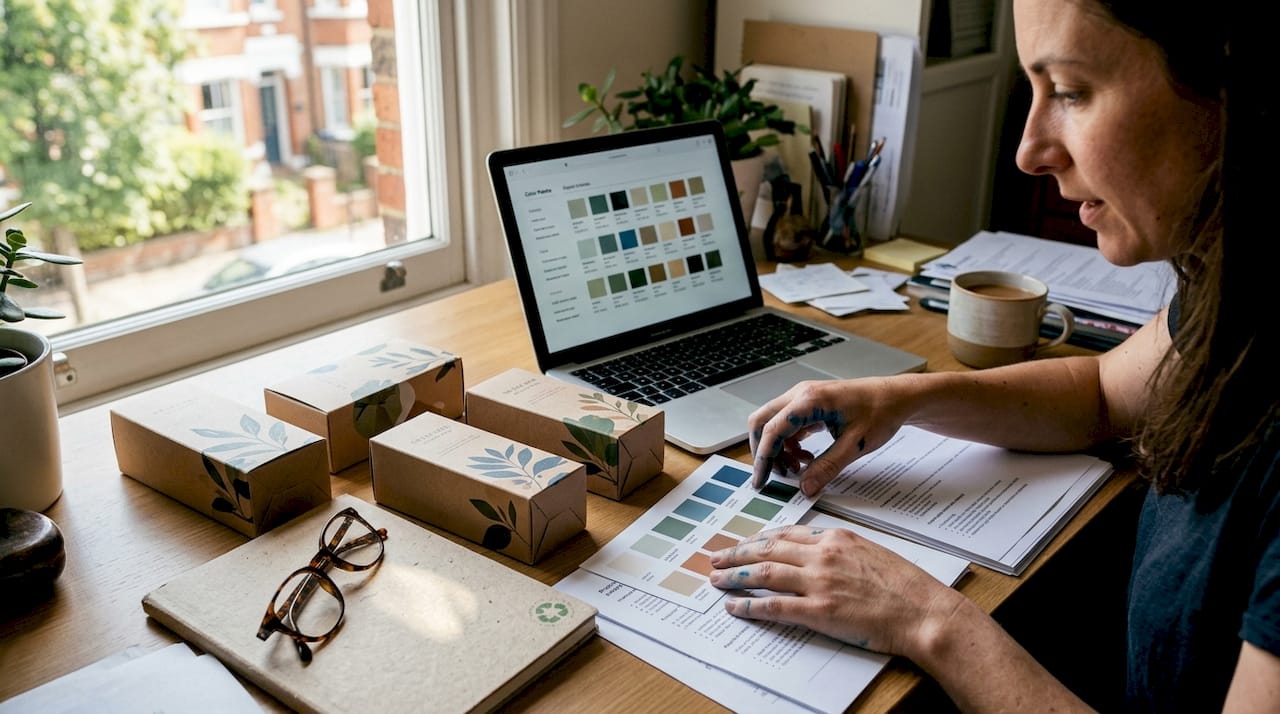
For natural and vegan skincare brands, certain visual choices carry specific meaning. Earthy tones, organic shapes, and minimalist designs evoke purity, nature, and quiet luxury in ways that bold metallics or neon palettes simply cannot. Here is a quick reference for common eco-visual choices and how they land with consumers:
| Visual element | Eco/natural signal | Premium/luxury signal |
|---|---|---|
| Leaf or botanical icon | High | Moderate |
| Lab flask or molecule | Low | High |
| Earth tones (greens, creams, taupes) | High | Moderate |
| Metallics (gold, silver) | Low | High |
| Sans-serif typography | Moderate | High |
| Script/handwritten typography | High | Moderate |
| Minimalist white space | Moderate | High |
| Dense pattern or texture | Low | Low |
The best eco-conscious brands blend signals from both columns. A cream background with a botanical line drawing and a clean sans-serif font reads as both natural and elevated. That combination is intentional.
For your logo, keep it simple. A nature-inspired symbol paired with a clean wordmark almost always outperforms a complex illustration. Simple logos scale well across packaging, social media, and digital ads.
Consistency is where many small brands lose ground. Using the same colors, fonts, and visual style across your website, packaging, email, and social media is what builds recognition over time. That consistency is directly tied to the 40% sales uplift mentioned earlier. Inconsistency signals an untrustworthy or unfinished brand, even if the products are excellent.
Explore natural packaging design and the broader eco-friendly skincare guide for deeper guidance on applying these principles to your actual product packaging. The beauty packaging industry is a multi-billion-dollar space, and your visual choices directly affect how your brand is perceived on shelf and online.
Ethical ingredients, certifications, and sustainable packaging
With strong visuals in place, the next layer of trust comes from making your ethical choices visible and verifiable. This is where many brands talk the talk but fail to walk the walk.
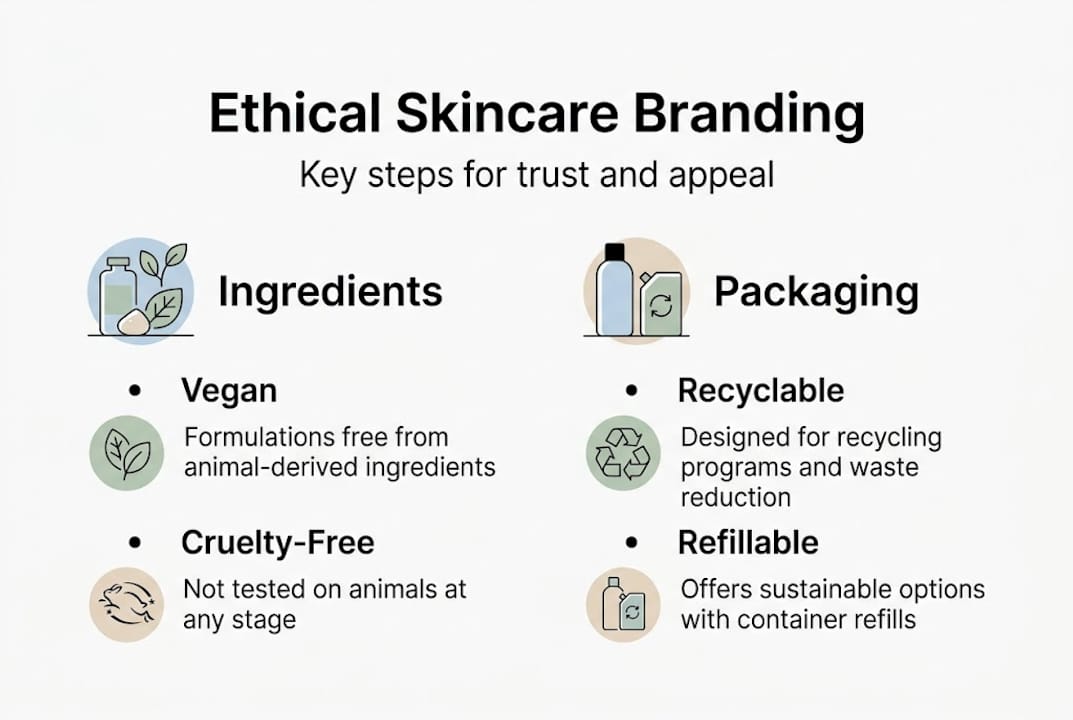
Certifications are one of the clearest trust signals available to natural skincare brands. Here is a comparison of the most recognized ones:
| Certification | What it guarantees | Visual trust cue |
|---|---|---|
| Vegan Society | No animal-derived ingredients or byproducts | Sunflower logo |
| Cruelty-Free International (Leaping Bunny) | No animal testing at any stage | Leaping bunny logo |
| COSMOS Organic | Organic and natural ingredient standards | COSMOS stamp |
| EWG Verified | Meets strict safety and transparency standards | EWG badge |
| FSC Certified Packaging | Responsibly sourced paper and board | FSC tree-and-checkmark |
For ingredient transparency and responsible sourcing, follow these steps:
- List every ingredient with its common name and function on your product pages.
- Name your key suppliers and their sourcing standards.
- Document any third-party testing results and make them accessible.
- Update your ingredient disclosures whenever formulas change.
- Pursue at least one recognized certification before launch.
On the packaging side, the numbers are hard to ignore. The global beauty packaging market was valued at $26.4 billion in 2022, with skincare accounting for 45% of that share. PCR (post-consumer recycled) plastic use in skincare has grown 22% since 2020, and 64% of consumers now prefer recyclable packaging. Among Gen Z specifically, 67% actively choose brands with sustainable packaging. These are not niche preferences. They are mainstream expectations.
For cruelty-free certification and vegan skincare impact, the investment in proper certification pays back in consumer confidence and long-term loyalty.
Pro Tip: Never make a claim you cannot back up with documentation. If your packaging says “100% recyclable,” have the supplier certification ready. Greenwashing complaints can damage a brand far more than simply saying nothing at all.
Our take: Authenticity matters more than perfection in clean beauty branding
Here is something the step-by-step guides rarely say out loud: you do not need to do everything perfectly to build a successful natural skincare brand. You need to do the right things consistently and honestly.
New entrepreneurs often get paralyzed trying to check every box before launching. But consumers in the clean beauty space are remarkably forgiving of imperfection when they sense genuine intent. What they are not forgiving of is dishonesty. A brand with a clear founder story, two solid certifications, and honest ingredient labeling will outperform a brand with a flawless logo and hollow claims every single time.
That said, there is a real risk on the other end of the spectrum. Balancing authenticity with premium appeal is critical because eco-brands that lean too heavily into rustic, homespun aesthetics can read as cheap or unfinished. Refined minimalism is the sweet spot. Think clean lines, quality materials, and certifications front and center.
Your unique story and niche commitment are your biggest competitive advantages. Lean into them. Check out real-world brand impact to see how clarity and consistency translate into actual business results. Success in clean beauty is not about budget. It is about trust.
Ready to launch? Expert help for natural skincare branding
If you have worked through these steps and feel ready to bring your brand to life, you do not have to figure out the product side alone.
At Didis Beauty Center, we specialize in supporting beauty entrepreneurs with natural, vegan formulations that are ready to carry your brand. Our private label skincare solutions include customized eco-friendly packaging, ready-to-label product lines, and expert guidance tailored to founders who care about clean ingredients and ethical practices. Whether you are launching your first product or expanding an existing line, we make it easier to align your brand values with what is actually inside the bottle.
Frequently asked questions
How can I avoid greenwashing in skincare branding?
Be transparent about your ingredients and back up all claims with certifications and documentation. Ingredient transparency and testing are the clearest ways to build genuine trust with eco-conscious consumers.
What design elements make a natural skincare brand stand out?
Earthy tones, minimalist layouts, and nature-inspired symbols help convey authenticity and eco-conscious values in a way that resonates immediately with your target audience.
Do I need certifications for vegan or cruelty-free skincare branding?
Certifications such as Vegan Society and Cruelty-Free International significantly increase consumer trust and brand credibility. Vegan branding best practices consistently recommend pursuing recognized certifications before or shortly after launch.
What packaging trends are shaping eco skincare branding in 2026?
Recyclable materials, PCR plastics, and minimal-waste designs are now leading consumer preferences. With 64% of consumers preferring recyclable packaging, sustainable packaging is no longer optional for brands targeting eco-conscious buyers.
Discourse (0)