


Vegan skincare is booming, but sourcing truly ethical products is harder than it looks. Self-declared claims often hide animal derivatives like beeswax or tallow emulsifiers, leaving consumers and entrepreneurs frustrated. With the global vegan cosmetics market expanding rapidly, knowing how to verify certifications, audit supply chains, and choose transparent partners is essential. This guide walks you through practical steps to source authentic vegan skincare for personal use or brand building, ensuring every product meets genuine cruelty-free and vegan standards.
Table of Contents
- Key takeaways
- Understanding vegan skincare sourcing requirements
- Step-by-step guide to sourcing vegan skincare products
- Navigating challenges and edge cases in vegan skincare sourcing
- Leveraging private label and transparent supply chains for brand success
- Source your vegan skincare with Didis Beauty Center
- FAQ
Key Takeaways
| Point | Details |
|---|---|
| Independent certifications | Look for Leaping Bunny, Vegan Society, or PETA logos backed by independent audits and ongoing monitoring to confirm claims. |
| Full INCI lists | Request complete INCI ingredient lists and compare them to animal derivative databases to identify hidden culprits. |
| Traceable supply chain | Audit the full supply chain from raw materials through processing aids to ensure no animal derivatives enter the product. |
| Botanical origin proof | Require suppliers to provide documentation proving plant or synthetic origins for ambiguous ingredients such as glycerin and lecithin. |
Understanding vegan skincare sourcing requirements
Before you choose products or partners, you need to understand what makes skincare genuinely vegan. It’s not enough to avoid obvious animal ingredients. You must verify that no animal testing occurred at any production stage and that every ingredient, including processing aids, is plant-based or synthetic.
Certifications provide the most reliable verification. Leaping Bunny requires a fixed cut-off date policy, supplier monitoring, and independent audits, while the Vegan Society Trademark verifies no animal testing at any stage. These logos signal that a brand has undergone rigorous third-party scrutiny, not just made a self-declared claim. Without certification, you’re relying on trust alone, which is risky in an industry where self-declared vegan claims are often unreliable and many products mislabel beeswax and tallow-derived emulsifiers.
Common animal-derived ingredients hide in plain sight. Watch for these culprits:
- Beeswax in balms and lip products
- Lanolin from sheep’s wool in moisturizers
- Carmine from crushed insects in pigments
- Tallow-based emulsifiers in creams
- Collagen and elastin from animal connective tissue
- Squalene from shark liver oil (look for plant-based squalane instead)
Supply chain transparency is essential because animal derivatives can enter formulations through tier-2 suppliers who provide raw materials to your direct supplier. A manufacturer might source glycerin from a distributor who doesn’t disclose whether it’s plant or animal-derived. Auditing the full supply chain, including these upstream sources, is the only way to guarantee vegan integrity.
“Ethical sourcing requires visibility into every tier of the supply chain. If you can’t trace an ingredient back to its botanical or synthetic origin, you can’t confidently call your product vegan.”
Self-declared vegan claims are a major pitfall. Brands often label products vegan based on final formulation alone, ignoring animal testing during ingredient development or hidden animal derivatives in processing aids. Mislabeling errors are common, especially with emulsifiers and stabilizers that can be derived from either plant or animal sources. For what is vegan beauty and why it matters, always demand third-party certification or detailed supplier documentation.
Step-by-step guide to sourcing vegan skincare products
Sourcing authentic vegan skincare requires a systematic approach. Whether you’re a consumer evaluating retail products or an entrepreneur selecting a manufacturing partner, these steps ensure you verify claims and avoid hidden animal derivatives.
-
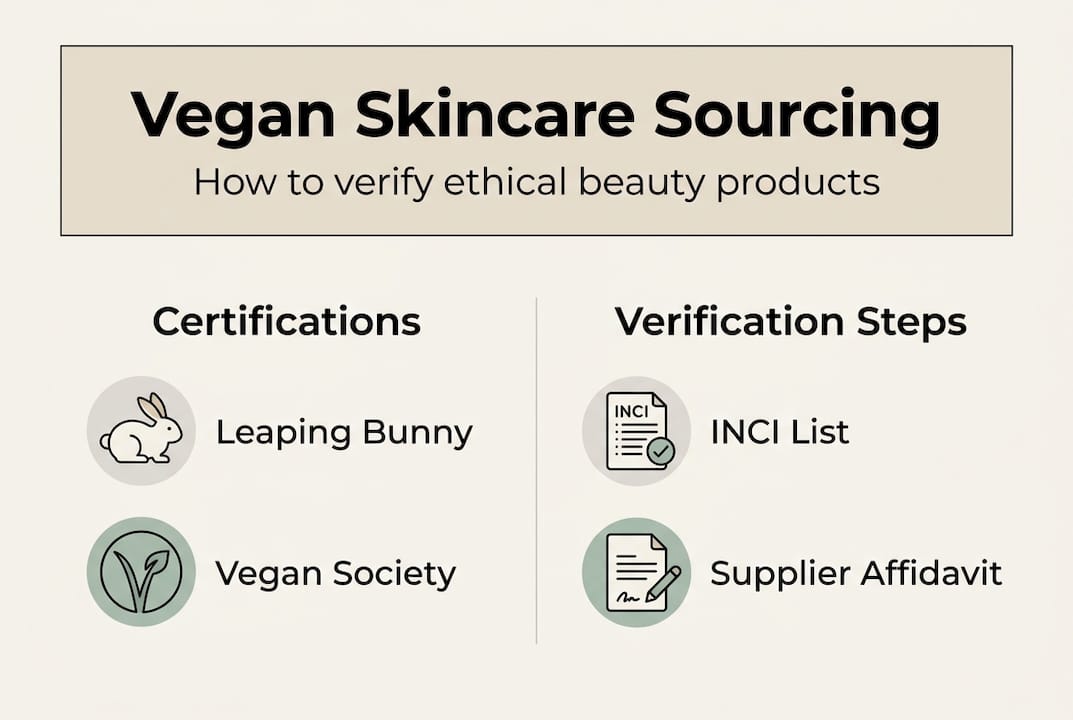
Verify third-party certification first. Check for Leaping Bunny, Vegan Society Trademark, or PETA-approved logos on packaging or the brand’s website. These certifications require independent audits and ongoing monitoring, giving you confidence that claims are legitimate.
-
Request full INCI ingredient lists. INCI (International Nomenclature of Cosmetic Ingredients) lists every component in a product, including processing aids and preservatives. Compare the list against databases of animal-derived ingredients to spot hidden culprits.
-
Confirm botanical sources for ambiguous ingredients. Glycerin, stearic acid, and lecithin can come from plants or animals. Ask suppliers to provide documentation proving plant or synthetic origins. Don’t accept vague assurances.
-
Audit tier-2 suppliers for full traceability. Your direct supplier might be transparent, but their raw material sources matter too. Request full INCI lists, check botanical sources, audit tier-2 suppliers, and test samples to avoid hidden animal derivatives.
-
Test sample products before committing to large orders. Patch testing reveals potential allergens or formulation issues, and it gives you a chance to verify texture, scent, and performance match your expectations.
| Verification method | Pros | Cons | Best for |
|---|---|---|---|
| Third-party certification | High trust, independent audits, ongoing monitoring | Costs money, takes time to obtain | Established brands, serious entrepreneurs |
| Supplier affidavits | Quick, cost-effective, detailed documentation | Relies on supplier honesty, no independent verification | Startups, low-budget projects |
| Ingredient database checks | Free, accessible, covers common derivatives | Requires expertise, doesn’t catch processing aids | DIY consumers, initial screening |
| Sample testing | Confirms quality, reveals formulation issues | Doesn’t verify vegan claims, only performance | Final verification step for all users |
Pro Tip: Insist on supplier affidavits that trace every ingredient back to its botanical or synthetic source. This documentation is your safety net if a certification audit or customer inquiry challenges your vegan claims.
If you’re exploring types of vegan skincare products for your brand, prioritize suppliers who provide INCI lists and tier-2 audits as standard practice. Transparency should be the baseline, not a special request.
Navigating challenges and edge cases in vegan skincare sourcing
Real-world sourcing comes with obstacles that test your commitment to vegan standards. Understanding these challenges and having solutions ready keeps your sourcing process on track.
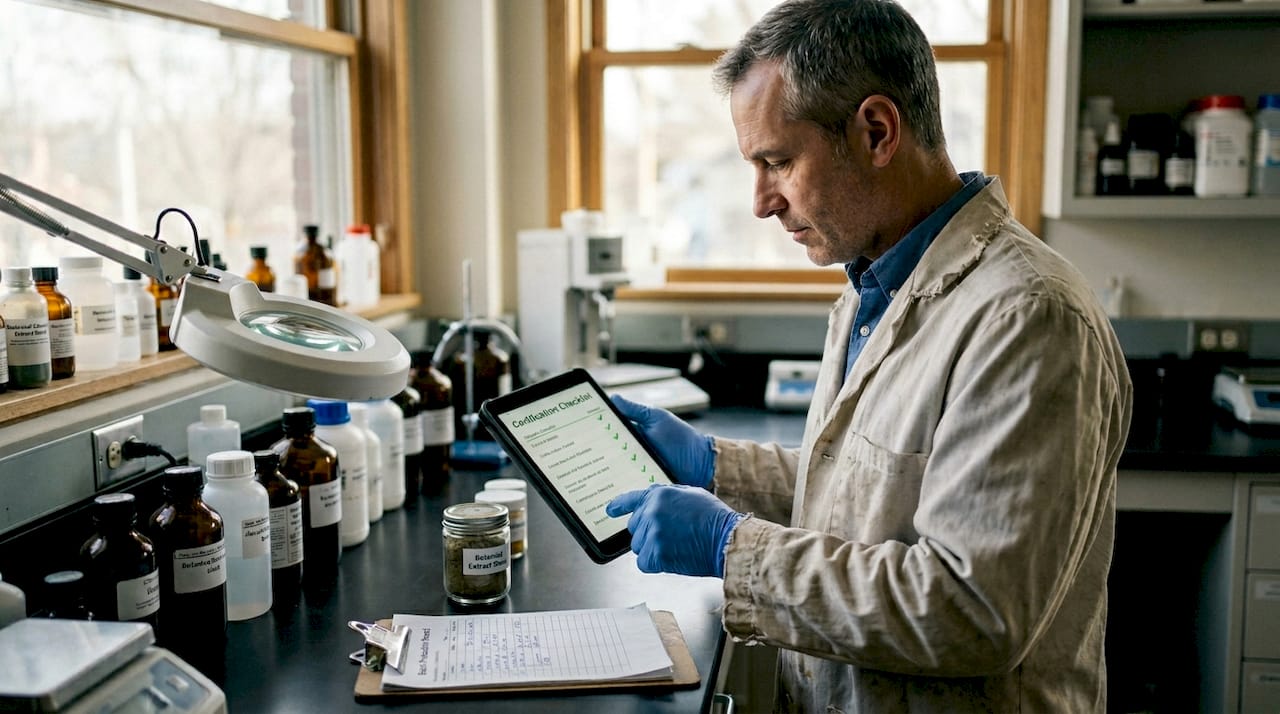
Unregulated markets create verification headaches. China suppliers often lack regulation for vegan claims, and shared manufacturing risks cross-contamination. If a facility produces both vegan and non-vegan products, trace amounts of animal derivatives can contaminate batches. Ask suppliers about their cleaning protocols and whether they dedicate equipment to vegan-only production.
Supply chain disruptions hit vegan ingredients hard. EUDR palm oil regulations and climate change cause ingredient supply disruptions, forcing brands to find alternative sources or reformulate products. Palm-derived ingredients like cetyl alcohol and glycerin are common in vegan skincare, but new sustainability rules restrict non-compliant suppliers. Building relationships with multiple suppliers mitigates this risk.
Performance trade-offs sometimes favor animal-derived ingredients. Squalene from shark liver is highly stable, but plant-based squalane from sugarcane or olives offers comparable benefits at a slightly higher cost. Lanolin is an excellent emollient, but plant butters like shea or cocoa butter provide similar moisture with a vegan profile. Weighing performance against ethics is part of the sourcing decision.
- Certifications reduce risk by requiring independent audits and fixed cut-off dates for animal testing
- Multi-sourcing protects against supply chain disruptions and gives you negotiating leverage
- Blockchain traceability tools let you track ingredients from farm to finished product, building consumer trust
- Dedicated vegan production lines eliminate cross-contamination concerns in shared facilities
| Ingredient type | Animal-derived option | Plant-based alternative | Performance comparison | Cost difference |
|---|---|---|---|---|
| Emollient | Lanolin | Shea butter, cocoa butter | Comparable moisture, slightly different texture | 10-20% higher |
| Humectant | Animal glycerin | Vegetable glycerin | Identical performance | Minimal |
| Emulsifier | Tallow-based stearic acid | Palm or coconut stearic acid | Identical performance | 5-15% higher |
| Skin conditioner | Shark squalene | Sugarcane or olive squalane | Comparable stability and absorption | 20-30% higher |
Pro Tip: Balance vegan and sustainability goals to build stronger brand loyalty. Consumers who care about cruelty-free products also value eco-conscious sourcing, so highlighting both ethics attracts a dedicated audience willing to pay premiums.
For more on aligning vegan and environmental values, explore vegan skincare and eco-conscious beauty strategies that resonate with today’s conscious consumers.
Leveraging private label and transparent supply chains for brand success
If you’re building a vegan skincare brand, private label manufacturing and supply chain transparency tools give you a competitive edge. These strategies let you source ethically while differentiating your brand in a crowded market.
Private label and OEM allow custom vegan brands with low minimum orders and supply chain transparency. Instead of developing formulations from scratch, you partner with a manufacturer who handles production while you focus on branding and marketing. This model is ideal for entrepreneurs who want to launch quickly without massive upfront investment.
Blockchain for supply chain transparency is gaining traction in ethical beauty. By recording every transaction and ingredient movement on an immutable ledger, blockchain lets you prove to customers that your products are genuinely vegan. Consumers can scan a QR code and see the entire journey from raw material to finished product, building trust that traditional marketing can’t match.
Economic pressures challenge strict vegan positioning. Some vegan brands face economic challenges and shift focus to clean versus strict vegan as they scale. Maintaining vegan standards can limit ingredient options and increase costs, leading some brands to broaden their messaging. Staying committed to vegan sourcing requires strong supplier relationships and a customer base that values ethics over price.
When selecting a private label partner, prioritize these criteria:
- Certified vegan and cruelty-free ingredients with third-party verification
- Transparent supply chain documentation, including tier-2 supplier audits
- Low minimum order quantities to test products before scaling
- Custom formulation options that let you differentiate your brand
- Technology-enabled traceability like blockchain or QR code systems
- Flexible production timelines that accommodate your launch schedule
Pro Tip: Negotiate low MOQs and tech-enabled traceability features into your private label contract. These tools differentiate your brand and justify premium pricing to consumers who demand proof of ethical sourcing.
For entrepreneurs ready to launch, private label skincare in 2026 offers cost-effective pathways to market with full control over vegan formulation and branding.
Source your vegan skincare with Didis Beauty Center
Building a vegan skincare brand requires a manufacturing partner who shares your commitment to ethics and transparency. Didis Beauty Center specializes in private label vegan skincare production, offering certified ingredients, cruelty-free formulations, and supply chain visibility that meets the highest standards.
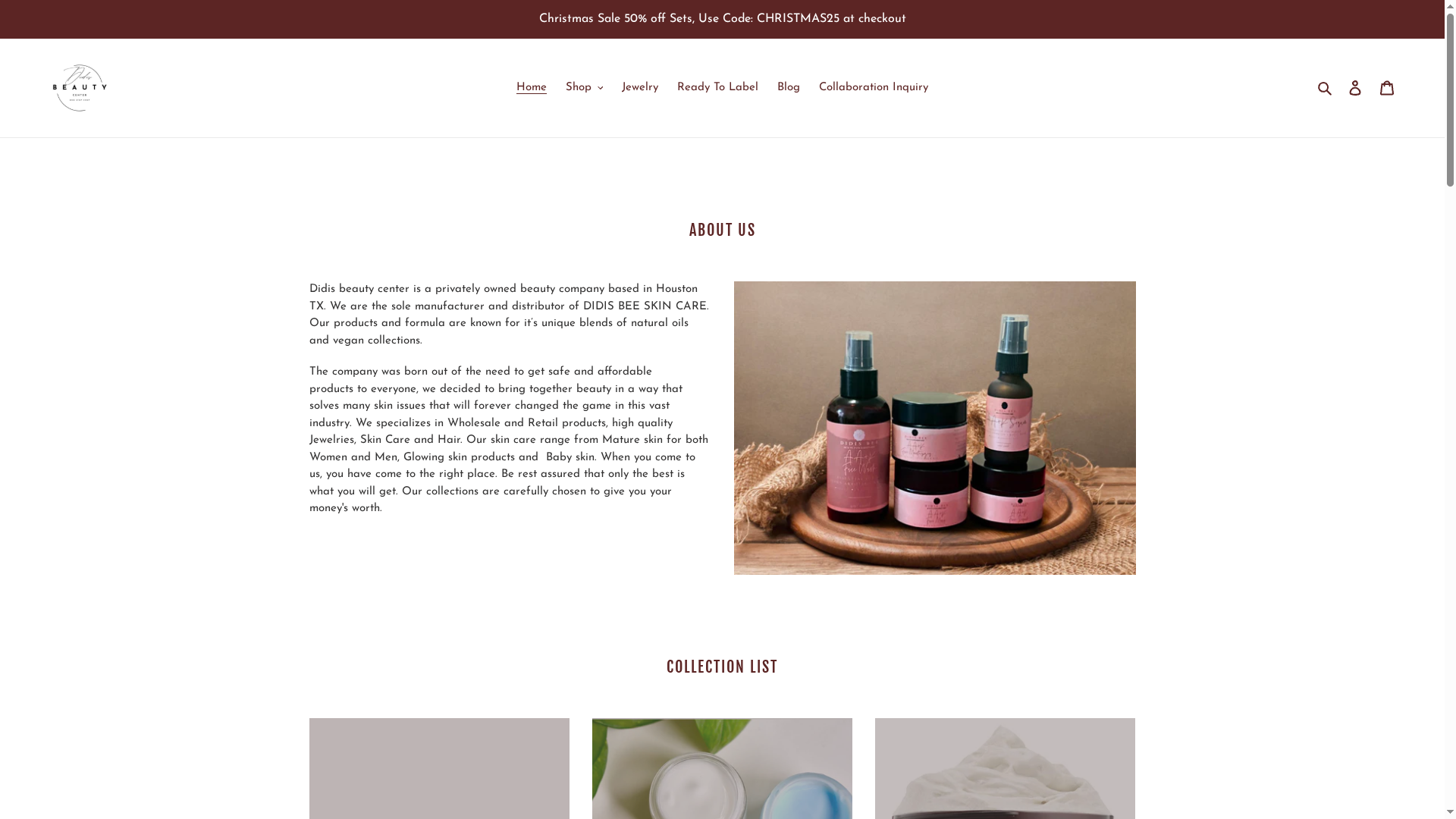
Our low minimum order quantities let you test products and refine your brand without massive upfront investment. We provide full INCI documentation, tier-2 supplier audits, and custom formulation options tailored to your vision. Whether you’re launching your first product line or expanding an existing brand, our team guides you through every step of ethical sourcing and production.
Key benefits of partnering with Didis Beauty Center:
- Certified vegan and cruelty-free ingredients verified by third-party audits
- Transparent supply chain with full traceability from raw material to finished product
- Sustainable sourcing practices that align vegan ethics with environmental responsibility
- Flexible order quantities and production timelines to match your business growth
Explore our private label services to start building your vegan skincare brand with confidence. Canadian entrepreneurs can also access private label options in Canada with the same ethical standards and transparency.
FAQ
How can I quickly verify if a vegan skincare product is truly cruelty-free?
Check for Leaping Bunny or Vegan Society Trademark logos on the packaging or brand website, as these certifications require independent audits. Use the Leaping Bunny database for quick verification of certified brands. Avoid relying solely on product packaging claims, as self-declared vegan labels often lack third-party oversight and may hide animal testing in ingredient development stages.
What should entrepreneurs look for when choosing a vegan skincare private label partner?
Prioritize partners with transparent supply chains and certification from recognized bodies like Leaping Bunny or Vegan Society. Look for low minimum order quantities and custom formulation options that let you test products before scaling. Ensure they audit tier-2 suppliers for full vegan compliance, as hidden animal derivatives often enter through upstream raw material sources. For guidance on launching efficiently, review private label skincare strategies for 2026.
How do sustainability regulations like EUDR affect vegan skincare sourcing?
EUDR restricts use of non-sustainable palm derivatives, which are common in vegan emulsifiers and moisturizers. Brands must source compliant ingredients to maintain both vegan and eco standards, adding complexity to supply chain management. Regulations boost consumer trust by ensuring products meet environmental and ethical benchmarks, making compliance a competitive advantage. Learn more about aligning vegan and sustainability goals in vegan skincare and eco-conscious beauty.
What are the most common hidden animal derivatives in vegan skincare?
Glycerin, stearic acid, and lecithin can be plant or animal-derived, requiring supplier documentation to confirm botanical sources. Beeswax, lanolin, carmine, and tallow-based emulsifiers frequently appear in products labeled natural or organic but not vegan. Processing aids and stabilizers often escape scrutiny, so requesting full INCI lists and tier-2 supplier audits is essential to catch these hidden ingredients.
How can blockchain improve vegan skincare supply chain transparency?
Blockchain records every ingredient transaction on an immutable ledger, letting consumers trace products from raw material to finished formulation. QR codes on packaging link to blockchain records, providing proof of vegan sourcing that traditional marketing cannot match. This technology builds consumer trust and differentiates brands in a market where self-declared claims are increasingly questioned, justifying premium pricing for verified ethical products.
Discourse (0)