


TL;DR:
- Sustainable accessories reduce environmental harm through certified, durable, and eco-friendly materials.
- Extending accessory lifespan and repairing items significantly lower carbon emissions and waste.
- Prioritizing quality and longevity over trends maximizes environmental benefits and minimizes overconsumption.
The fashion industry generates 10% of global carbon emissions and dumps 92 million tonnes of textile waste into the environment every single year. Most people focus on clothing when thinking about sustainability, but accessories are just as much a part of the problem. The good news is that switching to eco-friendly accessories is one of the most practical changes you can make to your beauty routine. In this article, you will learn what truly makes an accessory eco-friendly, which materials to look for, how to avoid greenwashing, and why longevity matters more than any trendy buzzword.
Table of Contents
- What makes an accessory eco-friendly?
- Environmental and personal benefits of eco-friendly accessories
- Materials matter: Vegan, recycled, and plant-based options explained
- How to identify and choose truly sustainable accessories
- Why prioritizing longevity beats chasing trends
- Find your perfect eco-friendly accessories at Didis Beauty Center
- Frequently asked questions
Key Takeaways
| Point | Details |
|---|---|
| Small choices add up | Switching to eco-accessories measurably cuts waste and carbon emissions. |
| Material isn’t everything | Longevity and genuine eco-certifications matter as much as what the product is made of. |
| Repair, reuse, rethink | Extending product life and avoiding trends is the most sustainable move you can make. |
| Look beyond green claims | Check for legit eco-labels and demand transparency to avoid greenwashing. |
What makes an accessory eco-friendly?
Not every product labeled “green” or “natural” earns that title. Eco-friendly accessories are those designed to reduce harm at every stage of their life, from raw material sourcing to the moment they leave your hands. That means thinking beyond the product itself and asking: where did it come from, how was it made, and where will it go when you no longer want it?
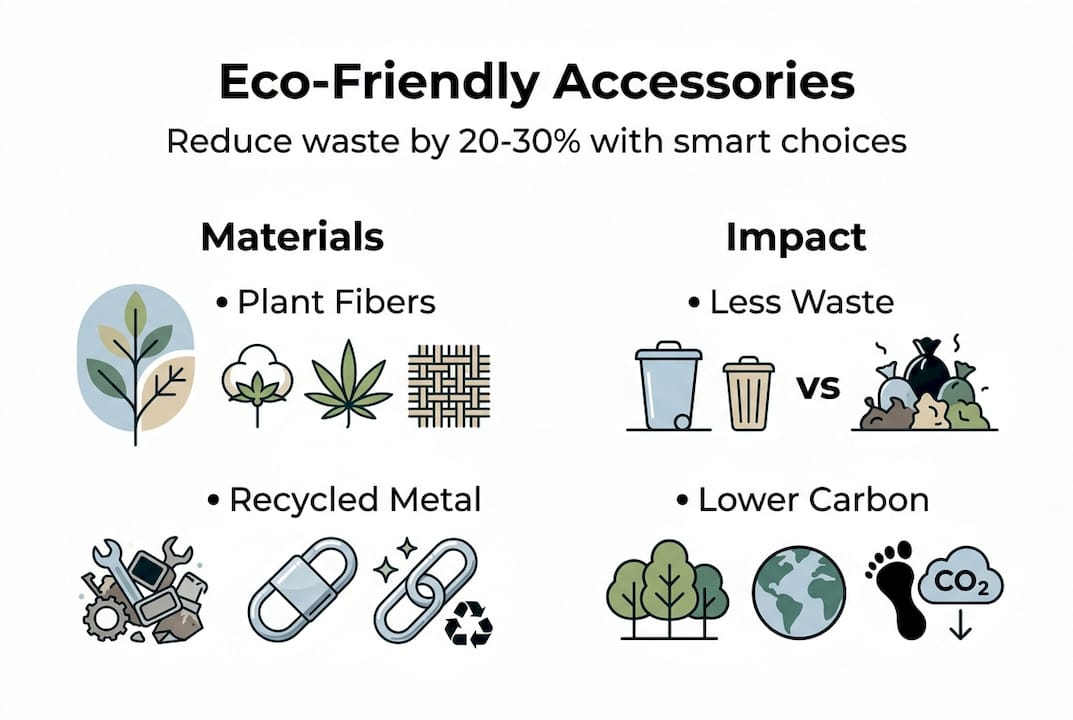
Eco-friendly accessories reduce environmental impact through sustainable materials like recycled metals, plant-based fibers, and vegan leathers, minimizing mining, waste, and animal agriculture. Recycled metals, for example, skip the energy-heavy extraction process entirely. Plant-based fibers like organic cotton or bamboo grow without synthetic pesticides. These are not just marketing claims. They represent real differences in resource use and pollution output.
Third-party certifications are your best tool for cutting through noise. Labels like GOTS (Global Organic Textile Standard), Fair Trade, and B Corp signal that an independent body has verified the claims. Research on eco-labeling influence confirms that certified products consistently outperform self-declared “eco” items in actual environmental performance. When you see a brand using vague terms like “conscious” or “responsible” without backing them up, that is a red flag.
Life cycle thinking is the framework that separates genuine sustainability from surface-level branding. It asks you to consider every phase of a product’s existence, not just what it is made of. A bamboo hair clip that falls apart in two months is not more sustainable than a well-made metal one that lasts a decade. Understanding eco-label certifications can help you apply this thinking to every purchase you make.
Eco-friendly vs. conventional materials at a glance:
| Material | Eco-friendly option | Conventional alternative |
|---|---|---|
| Metal | Recycled sterling silver | Virgin mined brass |
| Fabric | Organic cotton, hemp | Conventional polyester |
| Leather | Plant-based (cactus, apple) | PVC vegan or animal leather |
| Packaging | Recycled cardboard, glass | Single-use plastic |
Key qualities to look for in eco-friendly accessories:
- Third-party certification from a recognized body
- Transparent supply chain information
- Durable construction designed for long-term use
- Minimal or plastic-free packaging
- Repair or take-back programs offered by the brand
Environmental and personal benefits of eco-friendly accessories
Choosing sustainable accessories is not just an abstract act of environmental goodwill. The benefits are measurable and they affect both the planet and your personal health.
Extending accessory lifespan by just 9 months reduces the carbon footprint of that item by 20 to 30 percent. That is a significant number for something as simple as deciding to repair a bag strap instead of buying a new one. Repairing and reselling textiles actively displaces new purchases, which cuts manufacturing emissions at the source.
The numbers get even more specific when you look at repair models. Repair models can save 7.5 kg CO2e per cotton t-shirt and up to 30 kg CO2e for a pair of jeans. Apply that same logic to a well-made accessory you keep for years, and the savings stack up fast. Meanwhile, circular product benefits extend beyond carbon, reducing water use, chemical runoff, and landfill pressure.
For your personal health, eco-friendly accessories often mean fewer synthetic dyes, no heavy metal residues from cheap plating, and no off-gassing from low-quality plastics. These are real concerns, especially for items worn close to skin. Explore eco-friendly beauty accessories to see how material choices connect directly to skin safety.
Quick wins: carbon and waste savings by choice
| Action | Estimated saving |
|---|---|
| Extend accessory lifespan by 9 months | 20 to 30% lower carbon footprint |
| Repair instead of replace (cotton item) | Save up to 7.5 kg CO2e |
| Buy secondhand instead of new | Up to 70% lower emissions per item |
| Choose recycled metal over virgin | Reduces mining energy by up to 95% |
Benefits of choosing sustainable accessories:
- Lower personal exposure to toxic chemicals and dyes
- Reduced contribution to landfill and microplastic pollution
- Financial savings from buying fewer, longer-lasting pieces
- Supporting ethical labor practices and fair wages
Pro Tip: Before buying anything new, check if your current accessory can be repaired, restyled, or upcycled. A quick polish, new clasp, or creative rework can extend the life of a piece by years and save you both money and guilt.
Materials matter: Vegan, recycled, and plant-based options explained
Material choice is where sustainability either holds up or falls apart. The beauty world loves the word “vegan,” but vegan does not automatically mean eco-friendly. This is one of the most important distinctions to understand before you shop.
Vegan leather made from PU or PVC sheds microplastics with every use and can take 100 to 1,000 years to break down in a landfill. Plant-based alternatives like cactus leather or apple leather are better, but many are still hybrid materials that contain plastic binders. Genuine animal leather is highly durable but comes with serious animal welfare and environmental costs from livestock farming and tanning chemicals.
Recycled metals are a standout choice. Recycled gold and silver require a fraction of the energy needed for virgin mining and produce far less toxic waste. Natural fibers like organic hemp, linen, and bamboo biodegrade and grow with minimal inputs. These are the materials worth seeking out when you browse sustainable accessory types.
Statistic to know: Conventional leather tanning uses chromium, a heavy metal linked to soil and water contamination. Choosing vegetable-tanned or plant-based alternatives removes this risk entirely from your purchase.
Synthetic-only accessories present a hidden problem. They feel affordable and look sleek, but they shed microplastics during use and washing, contributing to water pollution that affects marine ecosystems and eventually human food chains. The durability argument for synthetics also breaks down quickly. Many cheap synthetic pieces last less than a year before cracking or fading.
For cruelty-free vegan picks that go beyond just skipping animal products, look for brands that disclose their full material composition and partner with certified suppliers. The honest comparison of vegan vs real leather shows that neither is perfect, which is exactly why plant-based innovation matters.
Best and most problematic materials for eco-beauty accessories:
- Best choices: Recycled metals, organic cotton, hemp, linen, plant-based leather (cactus, apple, cork)
- Use with caution: Bamboo fabric (processing can be chemical-heavy), plant-based hybrid leathers
- Avoid when possible: PVC vegan leather, virgin mined metals, conventional synthetic fabrics
Pro Tip: Ask brands directly about their material sourcing. A brand confident in its sustainability will answer clearly. Vague responses or redirects to general mission statements are a sign to look elsewhere.
How to identify and choose truly sustainable accessories
The market is full of products wearing eco-friendly labels that do not hold up to scrutiny. Knowing how to spot the real thing protects both your values and your wallet.
Eco-labeling and green packaging positively influence purchase intentions among eco-conscious consumers, and for good reason. Certified labels represent verified standards, not just brand promises. When you see GOTS, OEKO-TEX, or Leaping Bunny on an accessory, you know an independent organization has checked the claims.
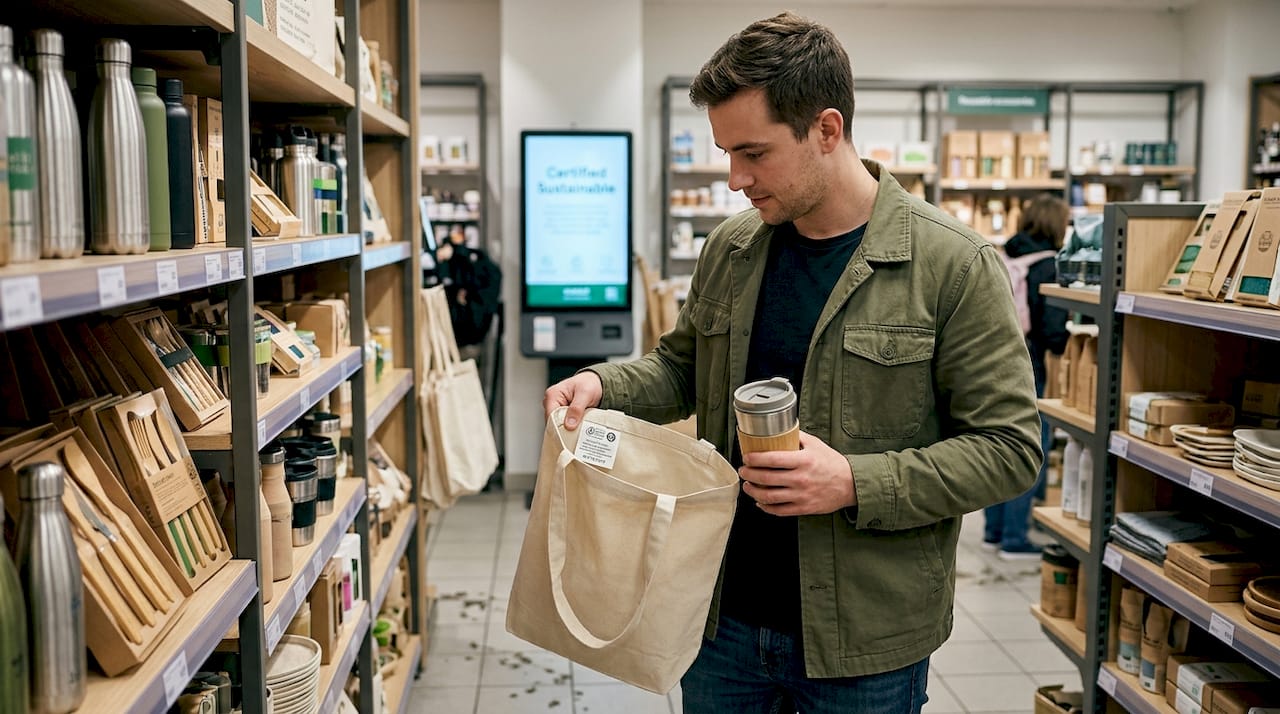
66% of consumers globally are willing to pay a premium for sustainably made products, and pro-environmental values consistently drive stronger purchasing decisions. You are not alone in prioritizing this. The demand for genuine sustainability is reshaping how brands operate and what they disclose.
Here is a practical checklist to run through before any purchase:
- Check for a recognized third-party certification on the product or brand page
- Read the material composition in full, not just the headline claim
- Research the brand’s supply chain transparency and labor practices
- Look for make a big impact choices that combine material quality with durability
- Check if the brand offers repair, return, or recycling programs
- Search for independent reviews that verify the product’s longevity
- Consult the eco-label ID guide to decode certification claims quickly
“Sustainability is not a feature. It is a practice embedded in every decision a brand makes, from sourcing to shipping to what happens after you are done with a product.”
Aligning your purchases with your values also means checking for ethical vegan beauty standards, not just material claims. Cruelty-free, fair labor, and carbon-offset shipping all contribute to the full picture.
Why prioritizing longevity beats chasing trends
Here is something the sustainable beauty industry rarely says out loud: the most eco-friendly accessory is the one you already own and keep using. Not the newest plant-based innovation. Not the trendiest recycled material. The one sitting in your drawer right now, if you take care of it.
We have seen how lifecycle thinking prioritizes durability and third-party certification over material alone, and the data backs this up completely. A well-made brass cuff you wear for ten years has a lower lifetime footprint than three “eco” alternatives you cycle through in the same period. The math is simple, but the marketing makes it easy to forget.
Chasing trends in sustainable beauty is still chasing trends. It still produces demand, drives manufacturing, and generates packaging waste. The shift in vegan beauty trends shows that even well-intentioned movements can create new cycles of overconsumption if longevity is not the anchor.
Our honest take: buy less, buy better, and use your eco-beauty success framework to make each purchase count. That is the move that actually moves the needle.
Find your perfect eco-friendly accessories at Didis Beauty Center
Ready to put these ideas into practice? At Didis Beauty Center, we have built our sustainable accessories collection around the same principles you just read about: quality materials, transparent sourcing, and designs made to last. Every piece is chosen with your values in mind.
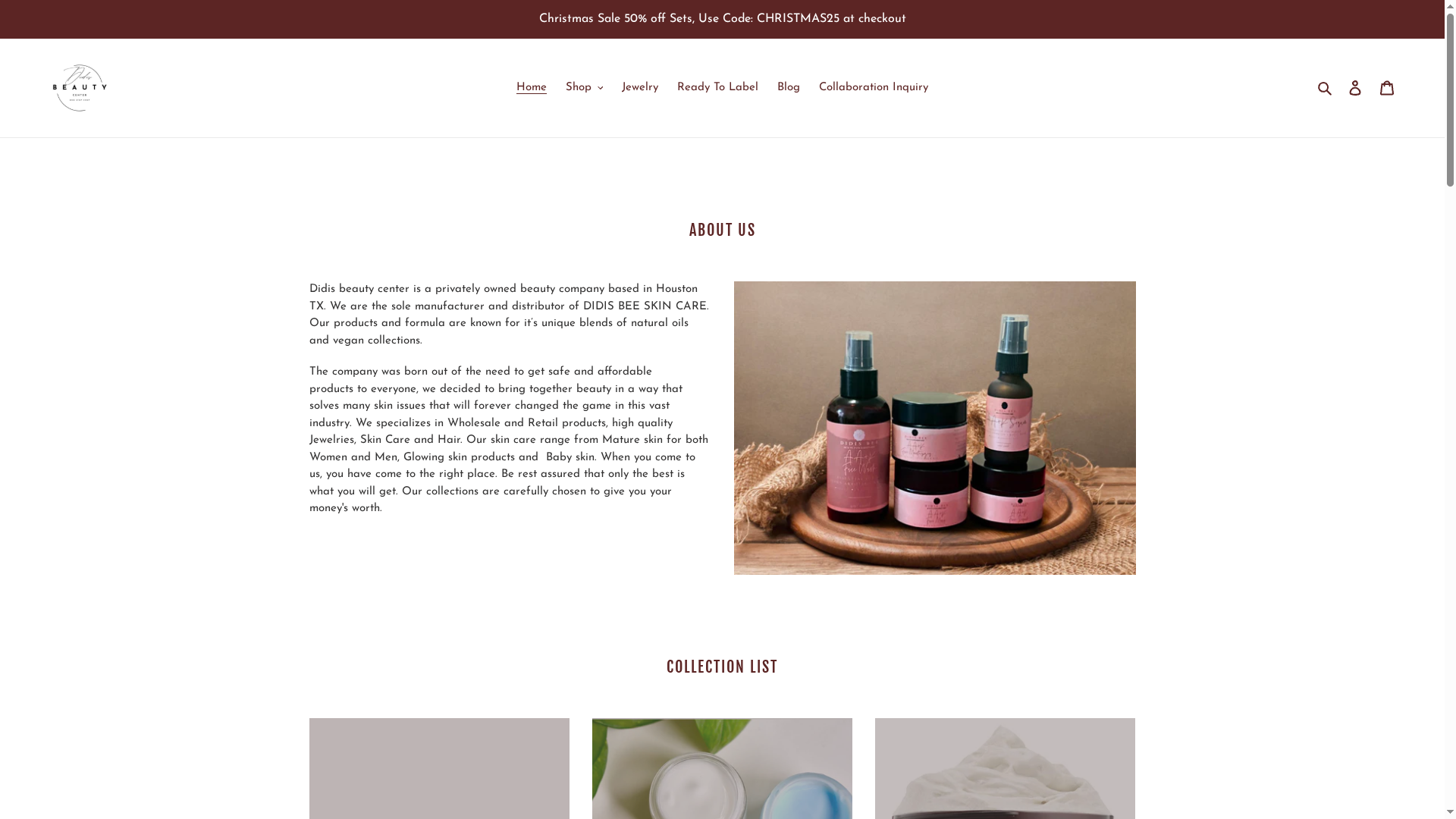
If you are a beauty entrepreneur, our eco-friendly private label program lets you build your own brand around vegan, cruelty-free, and sustainably sourced products. From accessories to skincare, you get the tools to launch with integrity. Browse our full collection and find accessories that feel as good as they look, without the environmental compromise.
Frequently asked questions
What materials are considered eco-friendly for accessories?
Recycled metals, plant-based fibers, and sustainable vegan leathers made without plastic hybrids are among the top eco-friendly options. These materials minimize mining impact, chemical use, and waste generation.
Do vegan accessories always mean sustainable?
Not always. PU and PVC vegan leather sheds microplastics and does not biodegrade for up to 1,000 years, so look for plant-based or certified eco alternatives instead.
How can I tell if an accessory is truly eco-friendly?
Look for trusted third-party certifications, detailed material disclosures, and supply chain transparency. Eco-labeling and green packaging are reliable signals that a brand’s claims have been independently verified.
Are sustainable accessories more expensive?
They often cost more upfront, but extending lifespan by 9 months cuts the carbon footprint by 20 to 30 percent and reduces how often you need to replace items, saving money over time.
Is prioritizing eco materials or product lifespan more important?
Product lifespan has a greater net impact. Lifecycle thinking shows that buying fewer, well-made items consistently outperforms chasing the latest eco material trend in overall environmental benefit.
Discourse (0)