


Most American beauty shoppers now look for eco-friendly options, and over 60 percent say sustainability influences their skincare choices. This growing demand speaks to a global wave of eco-conscious millennials and Gen Z seeking more than empty green claims. As American attitudes spark worldwide conversations, understanding what truly sets natural, vegan, and cruelty-free skincare apart becomes vital for those ready to align their routines with real ethical impact and environmental values.
Table of Contents
- Eco-Friendly Skincare Defined and Debunked
- Natural, Vegan, and Cruelty-Free: Key Differences
- Eco-Conscious Packaging and Ingredient Sourcing
- Risks of Greenwashing and Marketing Myths
- How to Choose Eco-Friendly Skincare Products
Key Takeaways
| Point | Details |
|---|---|
| Eco-Friendly Skincare Practices | Focus on products that prioritize sustainable ingredients and minimal environmental impact throughout their lifecycle. |
| Understanding Product Labels | Distinguish between natural, vegan, and cruelty-free labels to make informed purchasing decisions. |
| Beware of Greenwashing | Be critical of vague marketing claims and seek verification from third-party certifications to identify genuine eco-friendly brands. |
| Research and Transparency | Choose brands that provide clear information on ingredient sourcing and sustainability practices to ensure accountability. |
Eco-Friendly Skincare Defined and Debunked
The concept of eco-friendly skincare represents more than a trendy marketing term - it’s a comprehensive approach to beauty that prioritizes environmental sustainability and personal wellness. According to a comprehensive review analyzing sustainability paradigms within cosmetics, true eco-friendly skincare goes beyond superficial green claims, demanding genuine commitment to environmental protection and ethical ingredient sourcing.
At its core, eco-friendly skincare involves selecting products that minimize environmental impact while delivering effective skincare results. This means prioritizing ingredients that are responsibly sourced, biodegradable, and produced through sustainable manufacturing processes. Global perspectives on eco-friendly cosmetics highlight a significant industry shift toward natural, minimally processed ingredients that align with broader sustainable development goals. Key characteristics include:
- Organic and natural ingredient composition
- Cruelty-free production methods
- Minimal and recyclable packaging
- Reduced carbon footprint during manufacturing
- Transparent supply chain practices
Consumers increasingly recognize that eco-friendly skincare isn’t just about the product itself, but the entire lifecycle of production. This holistic approach challenges traditional beauty industry practices by demanding accountability at every stage - from raw material extraction to final product delivery. The movement represents a powerful intersection of personal health, environmental responsibility, and ethical consumption.
Pro Tip: When evaluating eco-friendly skincare products, look beyond marketing labels and research the brand’s actual sustainability practices and ingredient sourcing methods.
Natural, Vegan, and Cruelty-Free: Key Differences
Understanding the nuanced distinctions between natural, vegan, and cruelty-free skincare labels is crucial for making informed purchasing decisions. Comprehensive research from dermatological experts reveals significant variations in these classifications, highlighting the complexity of ethical beauty product selection.
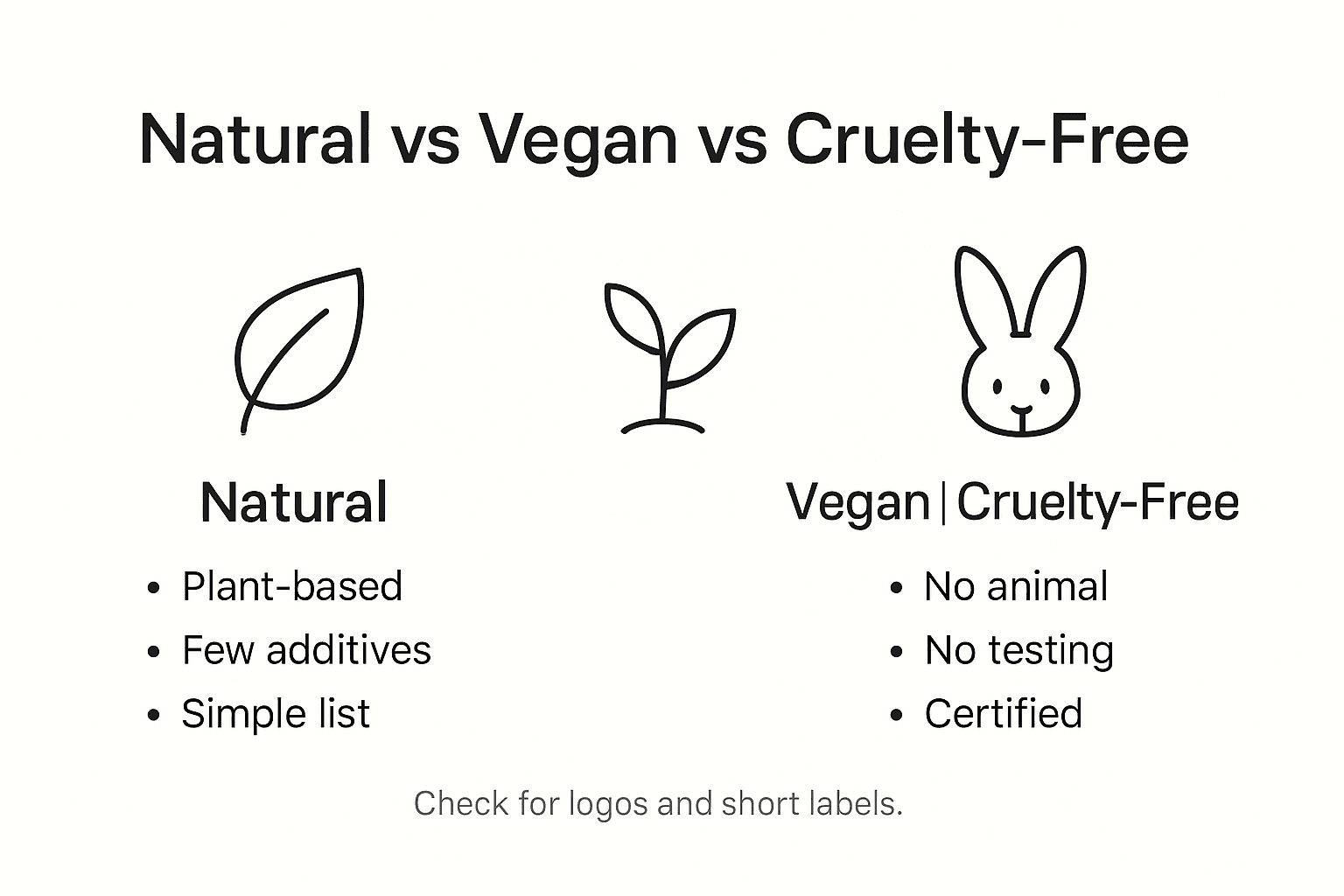
The term natural typically refers to products containing ingredients sourced directly from nature, with minimal synthetic processing. Vegan skincare, however, specifically means no animal-derived ingredients are used - including honey, beeswax, lanolin, or collagen. Certification standards from European experts demonstrate that these terms are not interchangeable, and a product can be natural without being vegan, or vegan without being natural.
Cruelty-free represents a commitment to zero animal testing throughout product development and manufacturing. This means no animal experiments were conducted at any stage, including ingredient sourcing, formulation, and final product testing. Critically, a cruelty-free product is not automatically vegan - it might still contain animal-derived ingredients while maintaining ethical testing standards.
Key distinctions between these categories include:
- Natural: Plant and mineral-based ingredients
- Vegan: Zero animal-derived ingredients
- Cruelty-Free: No animal testing during production
Pro Tip: Always check for specific certification logos and read ingredient lists carefully, as marketing terms can be misleading and lack standardized regulatory definitions.
Here is a quick comparison of common sustainability certifications in skincare:
| Certification Logo | What It Certifies | Typical Requirements |
|---|---|---|
| USDA Organic | High organic ingredient content | No synthetic pesticides or fertilizers |
| Leaping Bunny | Cruelty-free practices | No animal testing at any stage |
| Ecocert | Natural and organic composition | Strict environmental and ingredient standards |
| Vegan Society | Absence of animal ingredients | No animal-derived substances; strict audits |
Eco-Conscious Packaging and Ingredient Sourcing
Sustainable skincare begins with thoughtful ingredient sourcing and packaging strategies that minimize environmental impact. Recent research examining upcycling and circularity in cosmetic product development reveals innovative approaches to reducing waste and creating more environmentally responsible beauty products.

Ingredient sourcing represents a critical frontier in eco-conscious skincare. Brands are increasingly turning to innovative solutions like utilizing food industry byproducts, reclaimed plant materials, and regenerative agricultural practices. Global strategies for embedding sustainability in cosmetic development demonstrate how advanced technologies like artificial intelligence and blockchain can support transparent supply chains and track the ecological footprint of each ingredient.
Packaging transformation is equally crucial in reducing environmental impact. Sustainable packaging strategies now include:
- Biodegradable material alternatives
- Recycled plastic components
- Minimalist design to reduce material consumption
- Refillable and reusable packaging systems
- Carbon-neutral packaging production
The goal extends beyond mere waste reduction - it’s about creating a comprehensive ecosystem of responsible production that considers environmental impact at every stage. From ingredient selection to final product delivery, eco-conscious brands are reimagining traditional manufacturing approaches with sustainability at their core.
Pro Tip: Research brands that provide transparent information about their ingredient sourcing and packaging sustainability, and prioritize those demonstrating genuine commitment to environmental responsibility.
Risks of Greenwashing and Marketing Myths
Greenwashing represents a dangerous trend in skincare marketing where brands create misleading environmental claims to capitalize on consumer ecological consciousness. Systematic research analyzing marketing practices reveals widespread deceptive green claims that undermine consumer trust and distort genuine sustainability efforts.
Marketing myths typically manifest through several strategic deception techniques. Brands might use vague terminology like “natural” or “eco-friendly” without substantive evidence, employ green-colored packaging, or highlight minimal sustainable practices while obscuring broader environmental impacts. Consumer research demonstrates how these tactics significantly influence purchasing behaviors and perceptions, creating a complex landscape of manipulation and misinformation.
Common greenwashing strategies include:
- Using misleading imagery suggesting environmental responsibility
- Making unverifiable sustainability claims
- Highlighting one eco-friendly aspect while ignoring larger environmental issues
- Displaying irrelevant or meaningless green certifications
- Exaggerating the environmental impact of minimal changes
Consumers must develop critical thinking skills to distinguish authentic sustainability efforts from marketing fabrications. This requires deep research, understanding ingredient sourcing, investigating brand practices, and maintaining a healthy skepticism toward environmental marketing claims.
Pro Tip: Always cross-reference brand sustainability claims with independent certification organizations and look for transparent, verifiable evidence of genuine environmental commitment.
How to Choose Eco-Friendly Skincare Products
Comprehensive sustainability strategies for identifying genuinely eco-friendly skincare products require a multifaceted approach that goes beyond surface-level marketing claims. Eco-friendly skincare demands careful consideration of ingredient sourcing, manufacturing processes, packaging, and overall environmental impact.
The selection process involves critically examining several key aspects of product development and composition. Expert guidance from the Skin Health Foundation highlights the importance of transparency and third-party certifications when evaluating skincare choices. Consumers should focus on understanding the complete lifecycle of their skincare products, from raw material extraction to final disposal.
Critical factors to consider when choosing eco-friendly skincare include:
- Ingredient origin and sustainability
- Biodegradability of product components
- Minimal and recyclable packaging
- Cruelty-free and vegan certifications
- Carbon footprint of production processes
- Transparency in supply chain practices
- Absence of harmful synthetic chemicals
- Support for regenerative agricultural practices
Making informed choices requires active research and a willingness to look beyond attractive packaging or compelling marketing narratives. Consumers must develop critical skills to decode ingredient lists, understand certification standards, and evaluate the genuine environmental commitment of skincare brands.
Below is a summary of factors that indicate genuine eco-friendly skincare brands:
| Indicator | Why It Matters | What to Look For |
|---|---|---|
| Transparent supply chain | Demonstrates accountability | Detailed sourcing, traceable ingredients |
| Third-party certification | Ensures verified claims | Recognized eco-labels, certification logos |
| Lifecycle reporting | Tracks environmental footprint | Public sustainability or impact reports |
| Regenerative ingredient sourcing | Supports ecosystem recovery | Use of regenerative agriculture or upcycled materials |
Pro Tip: Always request detailed sustainability reports from brands and prioritize companies that provide comprehensive, verifiable information about their environmental practices.
Discover Truly Eco-Friendly Skincare Solutions Today
Choosing genuinely eco-friendly skincare can be challenging with so many misleading claims and vague labels. This article highlights key hurdles like greenwashing and the importance of transparent supply chains, cruelty-free certifications, and sustainable ingredient sourcing. You deserve skincare products that not only care for your skin but also protect the planet. At Didis Beauty Center, we understand your goal to find safe, natural, and environmentally responsible options grounded in real sustainability.
Explore our wide range of products crafted with these values in mind. From refreshing face creams to gentle, natural soaps, each item is carefully selected or formulated to meet strict eco-conscious standards. If you are an entrepreneur ready to launch your own brand with ethical products, check out our Ready To Label collection.
Take control of your skincare routine and reduce your environmental footprint now. Visit Didis Beauty Center to find authentic, cruelty-free, and sustainable products that respect both your skin and the earth. Start your journey toward truly eco-friendly beauty today.
Frequently Asked Questions
What are the key characteristics of eco-friendly skincare?
Eco-friendly skincare products typically include organic and natural ingredients, cruelty-free production methods, minimal and recyclable packaging, and a reduced carbon footprint during manufacturing. Transparency in supply chain practices is also essential for genuine eco-friendliness.
How can I identify greenwashing in skincare products?
To identify greenwashing, look for vague marketing terms like “natural” or “eco-friendly” without evidence. Misleading imagery, unverifiable claims, and irrelevant certifications can also indicate greenwashing. Always check for independent certification and research the brand’s sustainability practices.
What is the difference between natural, vegan, and cruelty-free skincare?
Natural skincare contains ingredients sourced directly from nature, vegan skincare excludes all animal-derived ingredients, and cruelty-free skincare ensures no animal testing is conducted at any stage of production. It’s essential to understand these distinctions to make informed choices.
Why is ingredient sourcing important in eco-conscious skincare?
Ingredient sourcing is crucial because it affects the overall environmental impact of the products. Eco-conscious brands often utilize responsibly sourced, biodegradable ingredients and prioritize sustainable practices, which contribute to a lower ecological footprint and overall product sustainability.
Discourse (0)