


Toners have a reputation problem. For years, they were the skincare step most people skipped, dismissed as harsh, alcohol-soaked liquids that left your face feeling tight and stripped. That image is outdated. Modern toners have evolved into gentle, hydrating formulas packed with actives like AHAs, BHAs, niacinamide, and hyaluronic acid. If you follow a natural or vegan skincare routine, today’s toners can genuinely support your skin without compromising your values. This guide breaks down what toners actually do, why they work, and how to find the one that fits your routine.
Table of Contents
- What is a toner? Modern definitions and misconceptions
- Core benefits of using a toner in your routine
- Choosing the right toner: Ingredients, skin types, and natural considerations
- How to use toner effectively: Application methods and timing
- Are toners essential? What experts and research say
- Our perspective: A balanced approach to choosing and using toners
- Discover natural toner solutions at Didis Beauty Center
- Frequently asked questions
Key Takeaways
| Point | Details |
|---|---|
| Modern toners hydrate and prep | Today’s formulas are gentle, supporting hydration and skin balance after cleansing. |
| Ingredients matter most | Choose a toner based on your skin type and look for natural, vegan-friendly ingredients. |
| Consistent use yields results | Noticeable benefits come from daily application, especially within 6 weeks to 3 months. |
| Not essential for all | Toners can enhance skincare but aren’t mandatory for everyone, per expert consensus. |
What is a toner? Modern definitions and misconceptions
The word “toner” once meant one thing: a sharp, astringent liquid designed to strip excess oil and close pores after cleansing. Most of those formulas relied heavily on alcohol, which did tighten pores temporarily but also disrupted the skin’s natural moisture barrier. People with dry or sensitive skin found them irritating. Even oily skin types often experienced rebound oiliness as the skin overcompensated for the dryness.
That era is largely behind us. Today, toners in skincare serve a completely different purpose. The category now covers a wide range of lightweight, water-based liquids that deliver active ingredients directly to the skin after cleansing. Think of them as the bridge between your cleanser and the rest of your routine.
Here’s a quick look at how old and new formulas compare:
| Feature | Old-school toners | Modern toners |
|---|---|---|
| Main ingredient | Alcohol or witch hazel | Water, humectants, botanicals |
| Primary effect | Astringent, pore-tightening | Hydrating, balancing, active delivery |
| Skin feel after use | Tight, dry, sometimes stinging | Soft, plump, refreshed |
| Vegan/natural options | Rare | Widely available |
| Recommended for | Oily skin only | Most skin types |
Natural and vegan toners have become especially popular because they rely on plant-based actives like rose water, green tea extract, aloe vera, and fruit-derived acids. These ingredients are effective and align with cruelty-free values.
Here’s what you’ll typically find in a well-formulated modern toner:
- Humectants like glycerin or hyaluronic acid to pull moisture into the skin
- Botanical extracts such as chamomile or green tea for calming and antioxidant support
- Gentle acids like lactic acid (an AHA) or salicylic acid (a BHA) for mild exfoliation
- Niacinamide for brightening and pore refinement
- Aloe vera for soothing and hydration
“The modern toner isn’t the harsh afterthought it used to be. It’s a targeted treatment step that can make every product you apply afterward work better.”
Understanding this shift is the first step to using toners effectively and confidently.
Core benefits of using a toner in your routine
Now that we understand where toners fit in skincare history, let’s look at why they’re used and the valid benefits modern formulas can offer.
The most consistent benefit is improved absorption. After cleansing, your skin is clean but also slightly dehydrated. Applying a hydrating toner on damp skin creates a moist environment that helps your serums and moisturizers absorb more efficiently. You’re essentially priming the surface.
Toners also help restore balance after cleansing. Even gentle cleansers can temporarily affect your skin’s surface environment. A well-formulated toner helps restore that balance quickly, which is especially helpful if you’re using natural cleansers that may vary in their formulation.
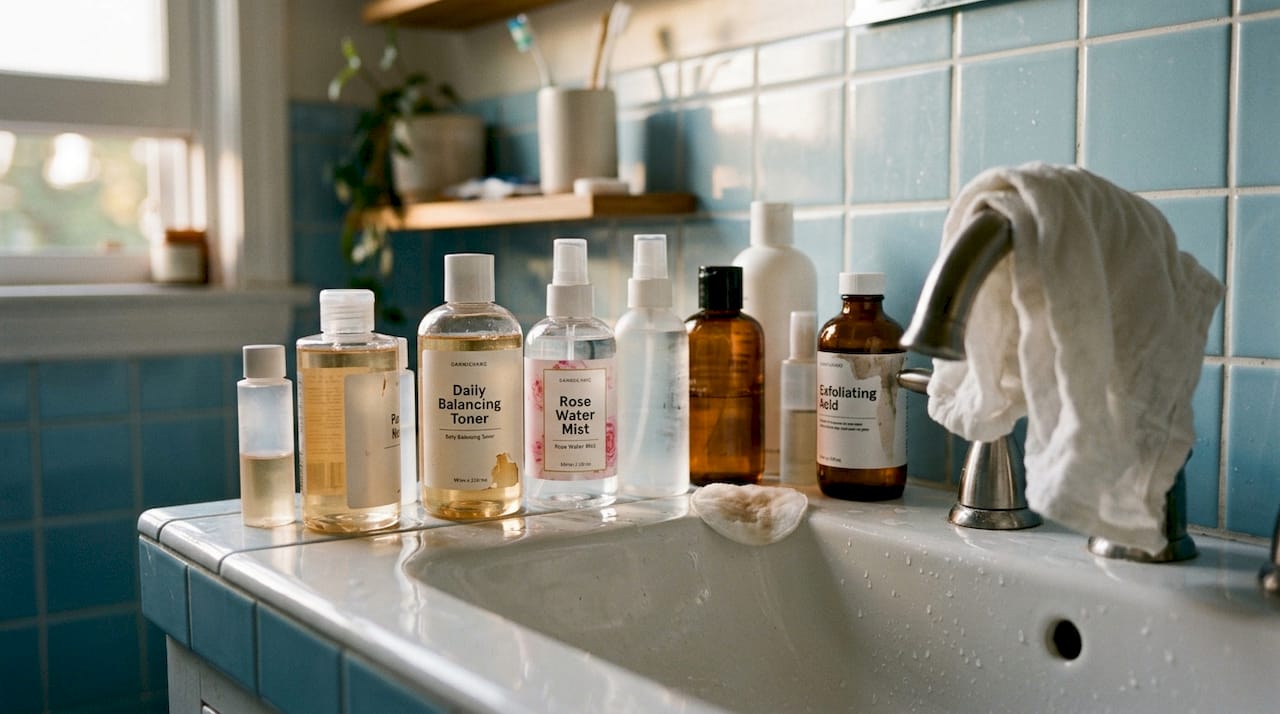
For those dealing with uneven texture or mild congestion, toners with AHAs or BHAs offer gentle exfoliation without the friction of a physical scrub. This is one of the reasons toners and essences have become such a staple in modern routines.
Here’s a summary of the core benefits by skin concern:
| Benefit | Best toner type | Key ingredients |
|---|---|---|
| Hydration | Hydrating toner | Hyaluronic acid, glycerin, aloe |
| Gentle exfoliation | Exfoliating toner | AHAs (lactic, glycolic), BHAs |
| Brightening | Active toner | Niacinamide, vitamin C derivatives |
| Soothing | Calming toner | Chamomile, green tea, rose water |
| Residue removal | Any lightweight toner | Water-based formulas |
Here’s a practical order for using toner in a basic routine:
- Cleanse your face and gently pat until damp, not fully dry
- Apply toner using your preferred method (more on that in a later section)
- Wait 20 to 30 seconds for the toner to absorb
- Follow with serum, then moisturizer
- Apply SPF in the morning, especially if using an exfoliating toner
Pro Tip: If you’re new to using facial toners naturally, start with a simple hydrating formula for two to four weeks before adding any exfoliating actives. This gives your skin time to adjust.
One important note: dermatologists note that toners boost routines but are optional if your cleanser is already pH-balanced, with benefits typically visible in 6 weeks to 3 months. There’s no universal mandate. But for many people, especially those building a thoughtful, ingredient-focused routine, toners add real, measurable value. You can also explore cruelty-free toners specifically formulated without animal-derived ingredients or testing.
Choosing the right toner: Ingredients, skin types, and natural considerations
While the benefits are clear, choosing the right toner depends on your individual needs and values.
The label is your best tool. Before you buy, scan the ingredient list for what’s actually in the formula. For natural and vegan routines, you want to see plant-based actives, no animal-derived ingredients (like honey, lanolin, or collagen), and a cruelty-free certification if possible.
Here’s a breakdown of what to look for based on your skin type:
- Dry or sensitive skin: Choose hydrating toners with glycerin, hyaluronic acid, aloe vera, or rose water. Avoid anything with alcohol, synthetic fragrance, or exfoliating acids until your barrier is strong.
- Oily or acne-prone skin: Look for exfoliating toners with salicylic acid (BHA) or glycolic acid (AHA). These help keep pores clear and reduce surface congestion.
- Combination skin: A gentle, balanced formula with niacinamide works well. It addresses oiliness in the T-zone without drying out drier areas.
- Mature or dull skin: Brightening toners with vitamin C derivatives, niacinamide, or lactic acid can improve radiance over time.
- Reactive or compromised skin: Skip exfoliating toners entirely. Focus on barrier-supporting ingredients like ceramides, panthenol, and centella asiatica.
For vegan shoppers, the ingredient watch-list goes beyond just avoiding animal testing. Watch for hidden animal-derived ingredients: carmine (a red dye from insects), beeswax, silk proteins, and some forms of collagen. A product can be labeled “natural” and still contain these.
Pro Tip: The brightening toner from Didis Beauty Center is formulated with plant-based actives and works well for those targeting uneven skin tone without harsh chemicals. It’s a solid starting point if you’re unsure where to begin.
Fragrance is another area to watch. High levels of synthetic or even natural fragrance can irritate sensitive and reactive skin types. If your skin tends to flush, itch, or react easily, choose fragrance-free or very lightly scented formulas.
How to use toner effectively: Application methods and timing
Once you’ve chosen your toner, knowing how to use it correctly ensures you get all the benefits without any drawbacks.
Application method matters more than most people realize. The technique you use affects how much product absorbs and how your skin responds.
Here’s a step-by-step guide for applying toner correctly:
- Cleanse first. Always apply toner to a freshly cleansed face. Toner is not a substitute for cleansing.
- Work on damp skin. Pat your face gently after cleansing but leave it slightly damp. This helps the toner absorb more effectively.
- Choose your method. For exfoliating toners, a cotton pad helps distribute the formula evenly and provides light physical contact. For hydrating toners, press the product directly into your skin with clean hands for better absorption and less waste.
- Don’t rub. Whether you use a cotton pad or hands, press and pat rather than dragging across the skin.
- Wait before layering. Give the toner 20 to 30 seconds to settle before applying your next product.
- Follow with SPF in the morning. This is non-negotiable if you’re using an exfoliating toner, since acids increase sun sensitivity.
For frequency, hydrating toners can generally be used twice daily, morning and night. Exfoliating toners are different. Start with two to three times per week and increase only if your skin tolerates it well.
Pro Tip: When introducing an acid-based toner, apply it at night only for the first few weeks. This reduces sun exposure risk and gives your skin time to adapt without daytime stress.
For those exploring natural toner application methods, pressing a hydrating formula into the skin with warm hands is often more effective than a cotton pad, which can absorb a significant amount of product before it even reaches your face.
Are toners essential? What experts and research say
Even with all this guidance, you may still wonder: how crucial is toner to a healthy skincare routine? Here’s what leading experts say.
The honest answer is that toners are not universally required. The American Academy of Dermatology does not include toner as a mandatory step in its basic skincare guidelines. Modern cleansers are formulated well enough that your skin’s natural balance typically restores itself within minutes of cleansing.
“With today’s well-formulated cleansers, many experts argue the skin self-regulates quickly enough that toner adds little for some users. But for others, the right formula makes a genuine difference in how their skin looks and feels.”
Here’s where the debate sits:
- For toners: They deliver actives efficiently, improve product absorption, and offer targeted benefits like exfoliation or brightening that cleansers don’t provide.
- Against toners: Limited clinical trials exist to support toners as mandatory. Most evidence is anecdotal or driven by marketing.
- Middle ground: For people with specific skin goals (brightening, acne control, hydration), a well-chosen toner adds measurable value. For those with simple, healthy skin and a solid cleanser, it’s genuinely optional.
Results, when they come, take time. Most users see visible changes in 6 to 12 weeks of consistent use. Patience and consistency matter more than the specific product you choose.
For more expert toner insights on cruelty-free formulas and what actually works, the evidence points to consistency over complexity. A simple, well-matched toner used regularly outperforms a sophisticated formula used sporadically. You can also review expert toner research from dermatologists who have weighed in on the real-world value of this step.
Our perspective: A balanced approach to choosing and using toners
After years of working with natural and vegan skincare, here’s what we’ve learned: most people either overthink toners or dismiss them entirely. Both extremes miss the point.
Toners are not magic. They won’t fix a broken routine or replace a good moisturizer. But for someone who cares about ingredient quality and wants to get more from their routine, the right toner is a genuinely useful tool. The key is matching the formula to your actual skin, not to what’s trending.
We’ve seen the best results when people approach toner the same way they approach the rest of their natural routine: with curiosity, patience, and a willingness to test and adjust. Read labels. Start simple. Notice how your skin responds over weeks, not days.
What we find most valuable is aligning your toner choice with your broader product philosophy. If you prioritize vegan, cruelty-free formulas, your toner should reflect that too. Consistency in values produces consistency in results. The role of toners in a natural routine is real, but it works best when it fits your whole approach, not just your skin type.
Discover natural toner solutions at Didis Beauty Center
Ready to explore clean, effective toners for your unique routine? Here’s where to start.
At Didis Beauty Center, we’ve built our toner range around one principle: every formula should work and align with your values. That means vegan ingredients, cruelty-free testing, and formulations designed for real skin goals.
If you’re targeting uneven tone or dullness, the Advanced Brightening Facial Toner is a strong starting point. It delivers plant-based actives in a gentle, effective formula. And if you’re an entrepreneur looking to build your own skincare line, our private label natural toners offer a ready-to-brand solution with the same clean formulations. Explore the full range and find the toner that fits your skin, your values, and your goals.
Frequently asked questions
Does everyone need to use a toner?
No. Toners boost routines but are optional, especially if you already use a gentle, pH-balanced cleanser that leaves your skin comfortable after washing.
Are toners good for sensitive skin?
Hydrating, alcohol-free toners work well for sensitive skin. Exfoliating toners with AHAs, BHAs, or high fragrance levels should be avoided if your skin reacts easily or has a compromised barrier.
How soon do you see results from toner use?
Results are visible in 6 weeks to 3 months for most users, with consistent daily application being more important than which specific formula you choose.
Can I use toner with other active ingredients?
Yes, but introduce exfoliating toners gradually and watch for irritation, particularly when layering with retinol, vitamin C, or other acids at the same time.
What’s the difference between toner and essence?
Toners primarily prep and balance the skin after cleansing, while essences focus on delivering concentrated nutrients and hydration. As toners and essences evolve, the line between them continues to blur in modern formulations.
Discourse (0)